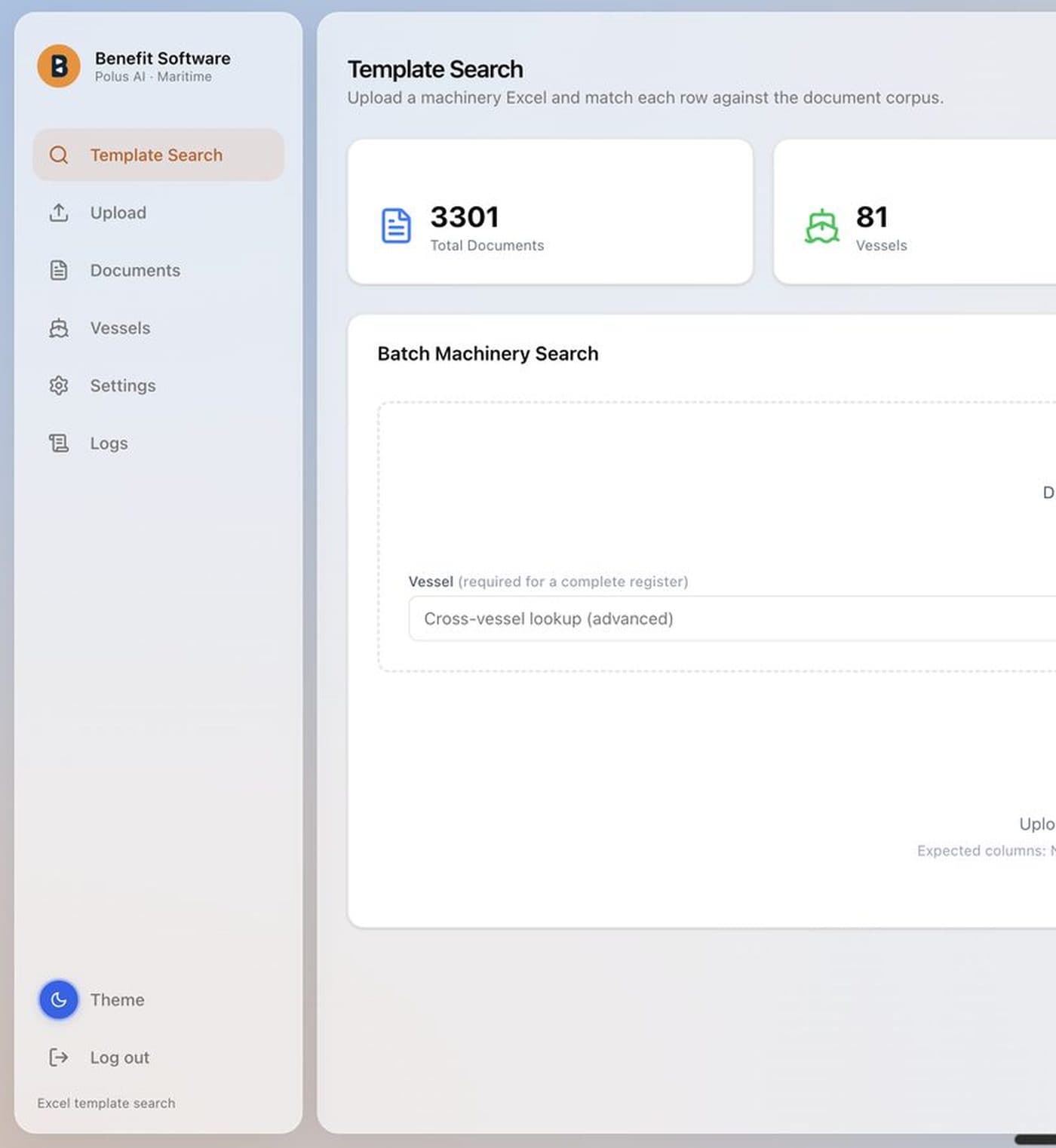
- 3,301documents indexed
- 81vessels covered
- 553spare parts pulled from one machinery system
The problem
Every pump, engine and scrubber on a ship arrives with a manual, and the manual is a PDF that runs to hundreds of pages. A fleet of eighty vessels accumulates thousands of them, in a dozen languages, scanned at different times by different people.
When a chief engineer needs a part number at two in the morning, the answer exists. It is inside a document nobody can search, in a folder nobody has opened in two years. So he calls the office, and the office calls the manufacturer, and a part that costs forty euros takes three days to identify.
The cost is not the search. It is the vessel waiting.
What it does
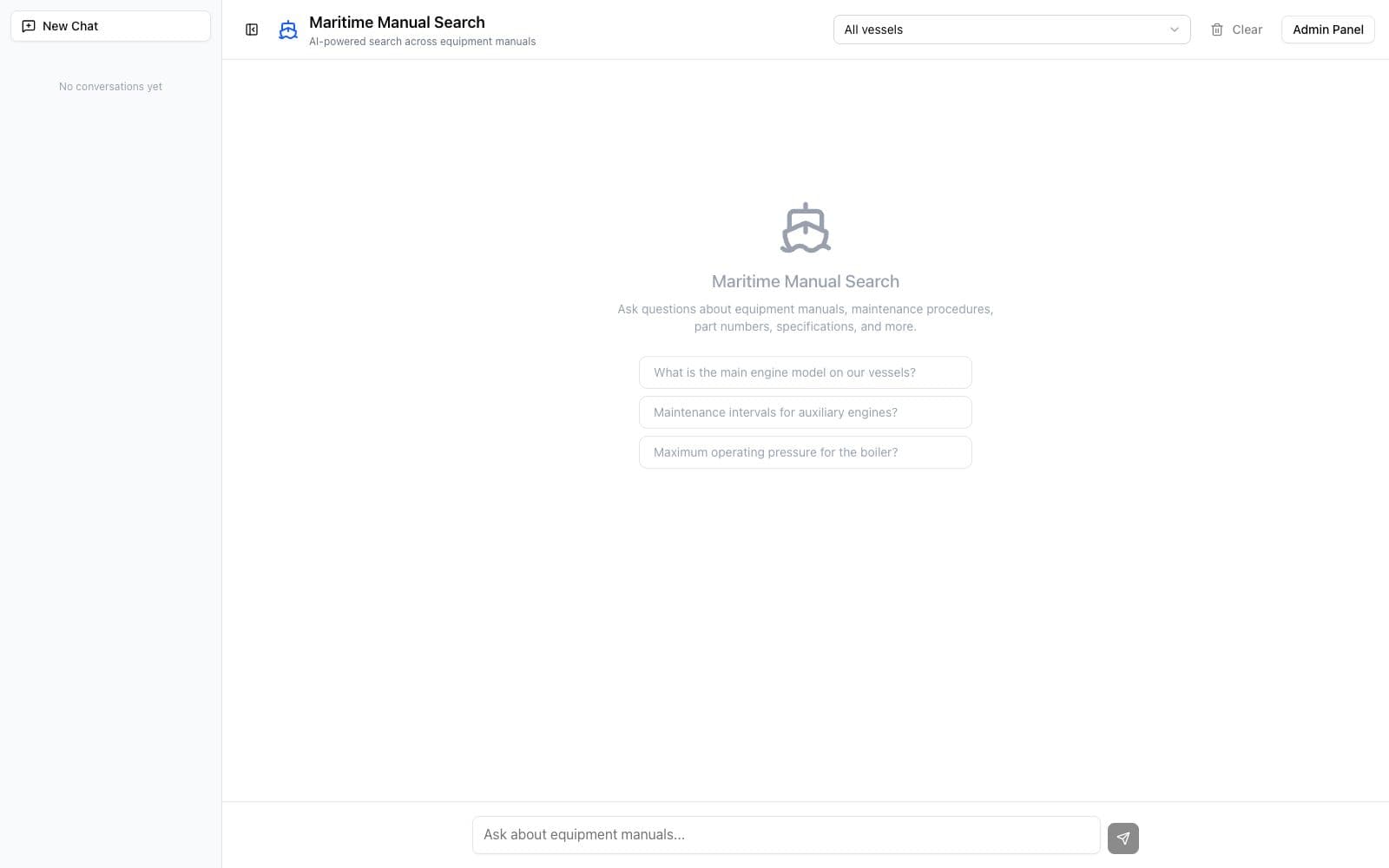
It reads the manuals so nobody has to. Ask it a question in the language you think in and it answers from the fleet's own documents, then shows you the exact page it took the answer from.
It also does the job nobody wants: turning a stack of manufacturer manuals into a structured parts list, which is work that has always been done by hand, badly, under time pressure.
How it works
- 01
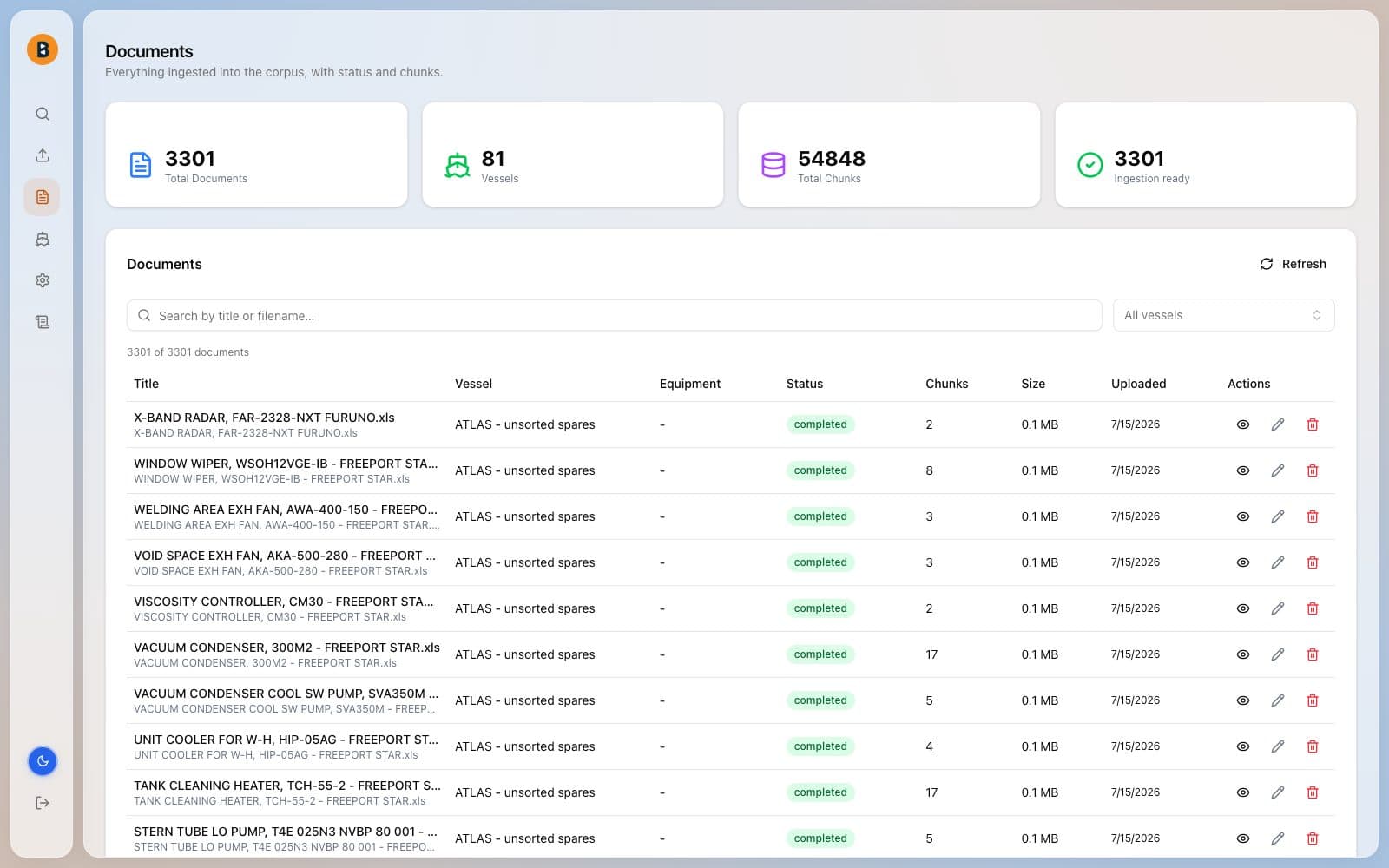
Everything the fleet owns, in one index
3,301 documents covering 81 vessels. Before this they were folders on a server, named by whoever uploaded them, findable only by someone who already knew what they were looking for.
- Vector database
- Chunked indexing
- 02
Including the ones that are photographs of paper
A good part of maritime documentation is scanned, sometimes badly. Those pages are read by a vision model rather than skipped, which matters because the oldest manuals are usually the ones covering the equipment still running.
- Vision OCR
- Multi-provider fallback
- 03
Ask in Greek or in English
Greek engineers do not write their questions in English, and the manufacturers do not write their manuals in Greek. The system takes either and searches across both, so nobody has to translate a question before asking it.
- Multilingual embeddings
- Hybrid keyword + semantic search
- 04
Then it shows you where it got that
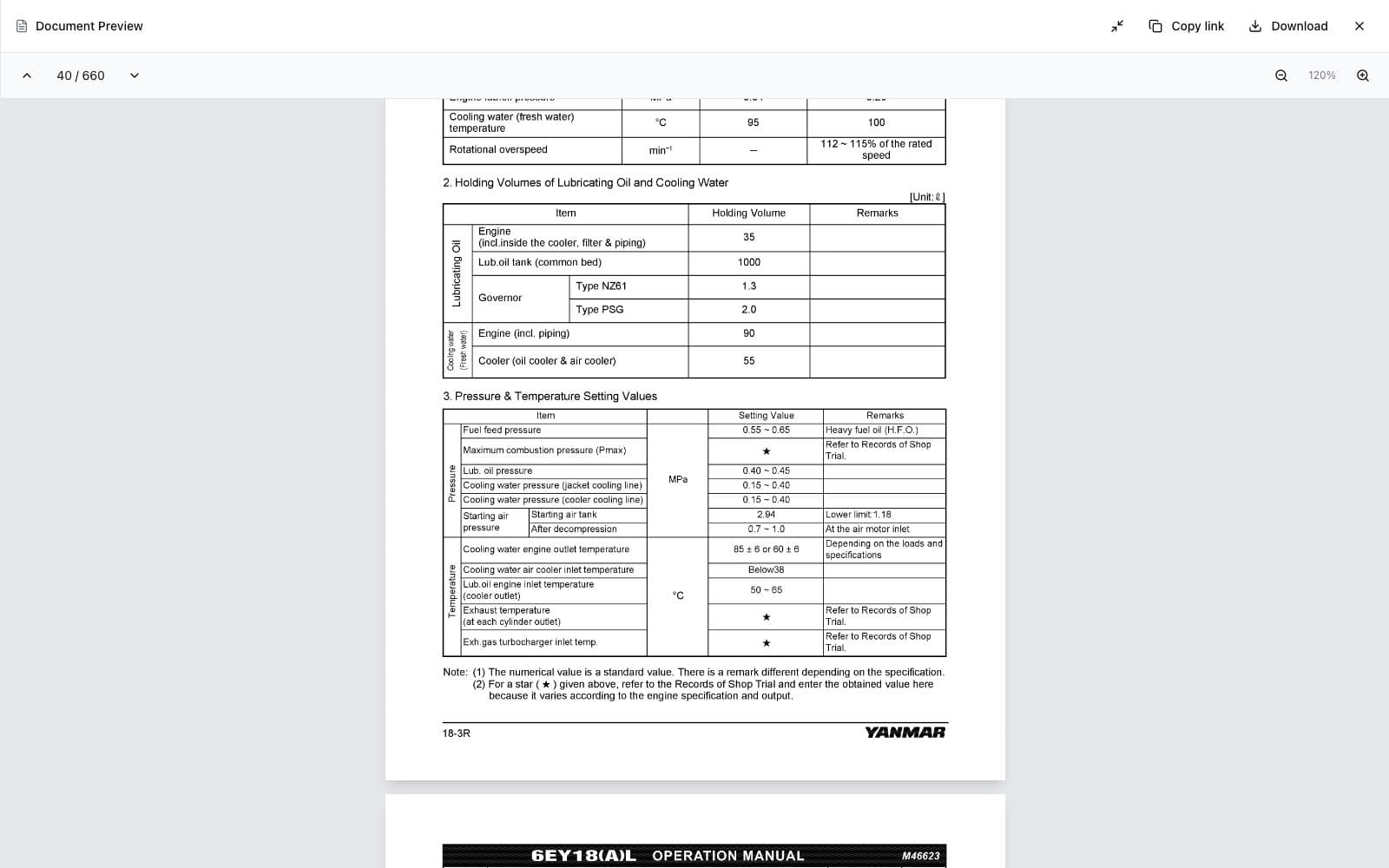
Every answer carries a citation, and the citation opens the original page with the matching passage highlighted. This is the part that decides whether anyone uses it twice. No engineer signs off maintenance on a paraphrase, and an answer he cannot check is an answer he will go and verify manually anyway.
- Source citations
- PDF text-layer highlighting
- 05
Or hand it the spreadsheet you already keep
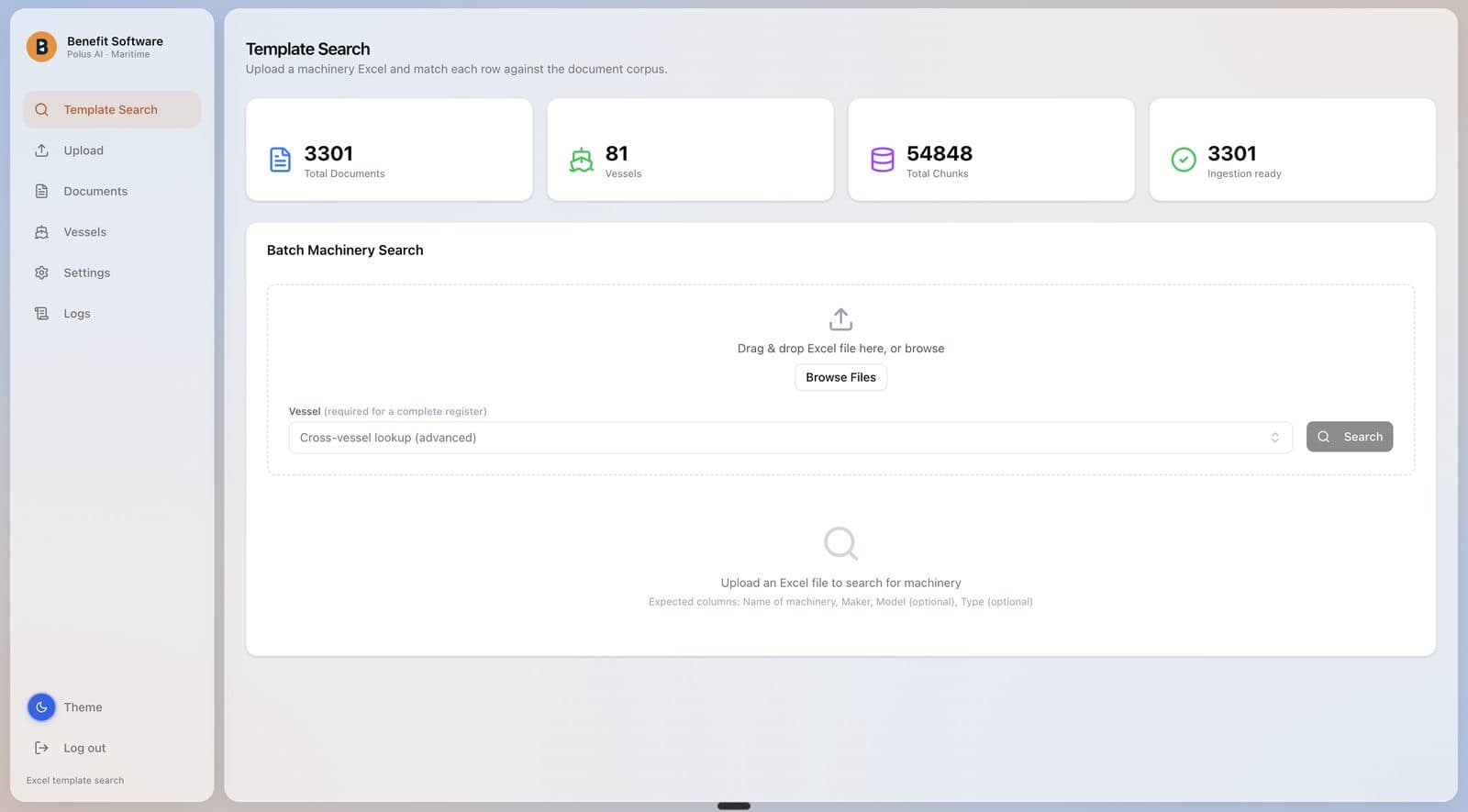
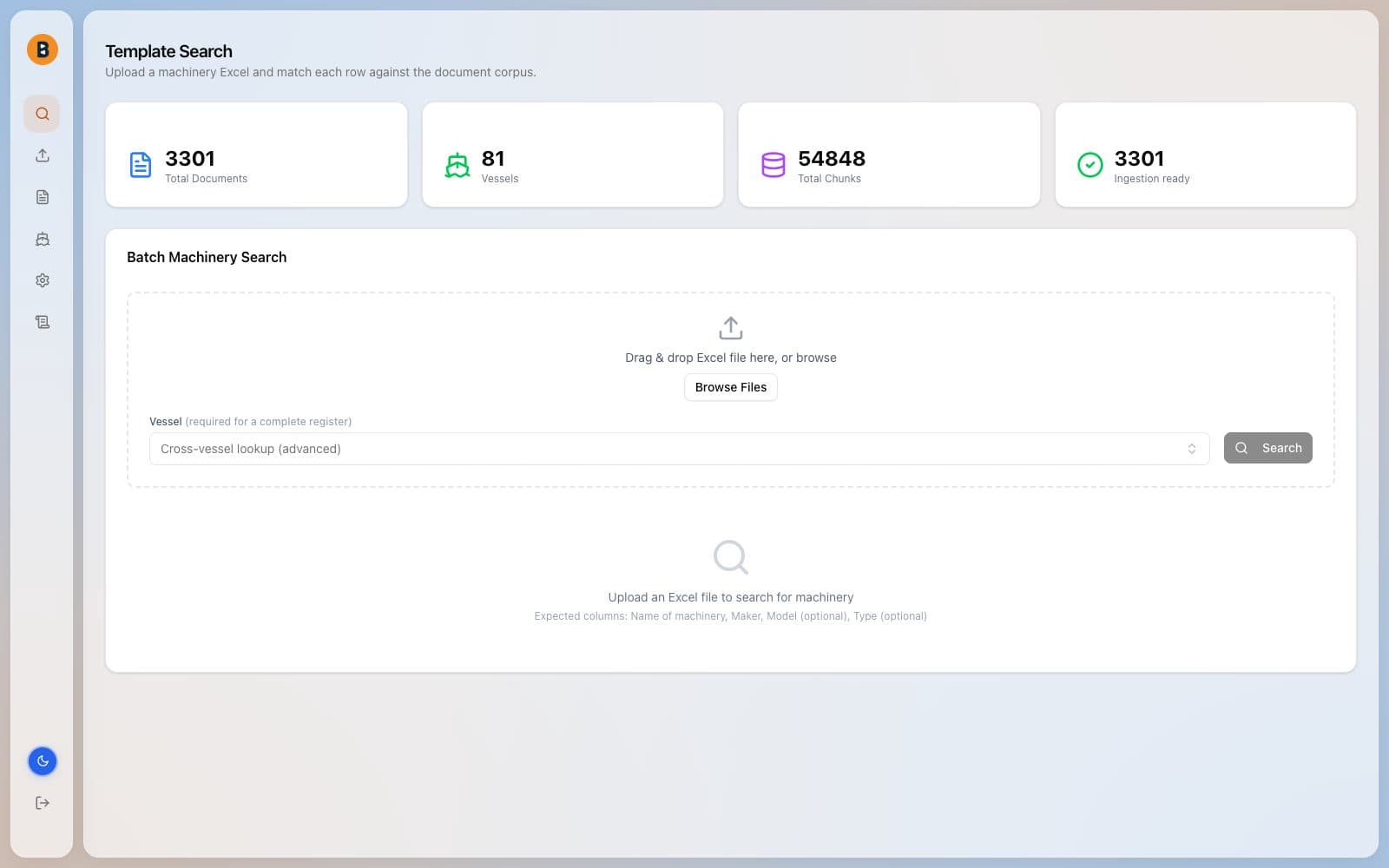
Every fleet maintains a machinery list in Excel. Upload it and it comes back filled in, each row marked found, needs review, or no match, so a person spends their time on the uncertain rows instead of all of them.
- Batch pipeline
- Confidence scoring per row
- 06
And it builds the catalogue nobody had time to build
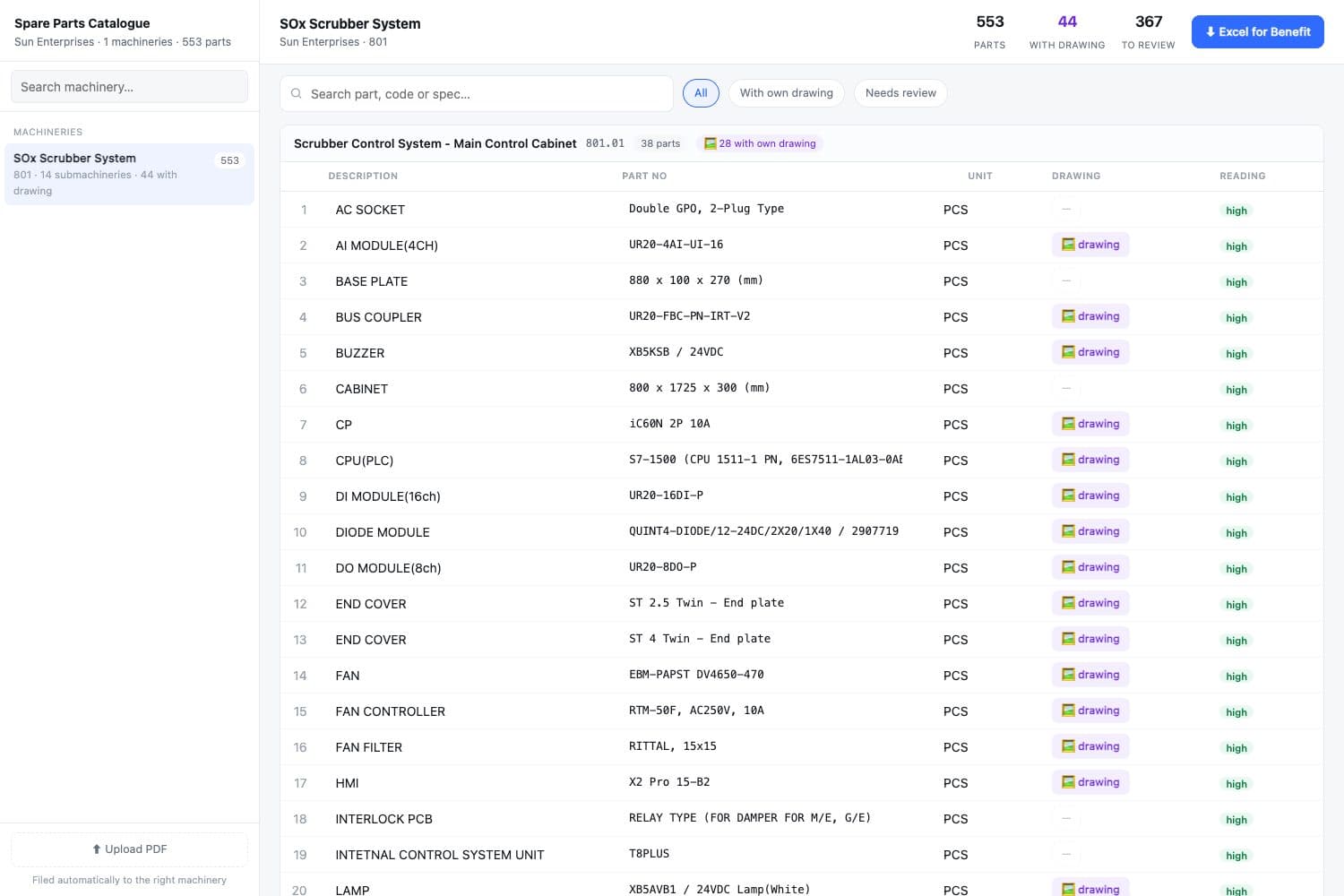
From one scrubber system it produced 553 spare parts with their codes, units and drawings, read out of 765 pages of manufacturer manuals in eight and a half minutes. Fourteen sub-systems, catalogued, exportable, in less time than the coffee break it would have interrupted.
- Document extraction
- Drawing linkage
- Excel export
What it changed for the business
The software vendor can now offer its fleet customers something none of its competitors do: their own documentation, answerable. For the fleets, a class of question that used to travel from ship to office to manufacturer now gets answered on the bridge.
- ~18 hourswhat that one parts catalogue would take by handEstimate: 553 parts at roughly two minutes each to locate in the manual, read and record.
- 8.5 minwhat the system took insteadMeasured, on the real documents, for one scrubber system.
- 3,301 docssearchable across 81 vessels, in two languagesMeasured, live in the platform.
- Every answeropens the page it came from, highlightedWhich is why engineers use it a second time.
Built with
- Retrieval + reranking
- Vision OCR
- FastAPI
- Next.js