- 30+molecules tested
- 462worldwide records read for one molecule
- 3of them that actually mattered
The problem
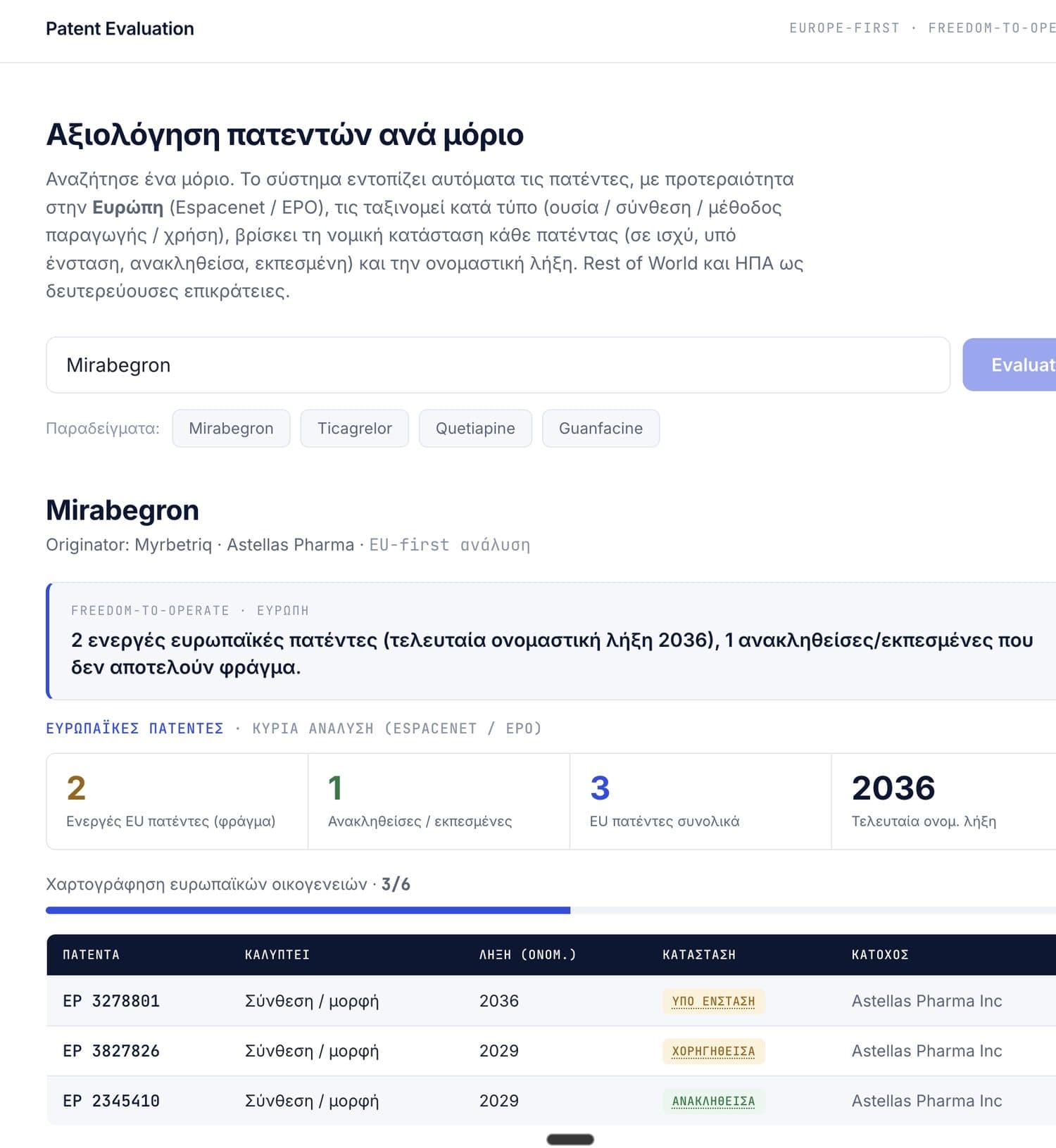
A generics manufacturer chooses its next product by working out which patents on the original still stand, which have been revoked, and when the last one lapses. Move too early and you are in an infringement case. Move too late and three competitors are already on the shelf.
The information is public. It is also spread across separate registries, in different formats, with legal statuses that change and expiry dates that are not what they appear to be. Answering the question properly means reading hundreds of records to find the three that matter.
What it does
It reads them for you. A molecule name goes in, and what comes back is the shape of the landscape: which patents block, what they cover, whether they are still in force, and the year the last one runs out.
It is deliberately built on free public sources, which is why it can sit on the open web and why it never touches anything confidential.
How it works
- 01
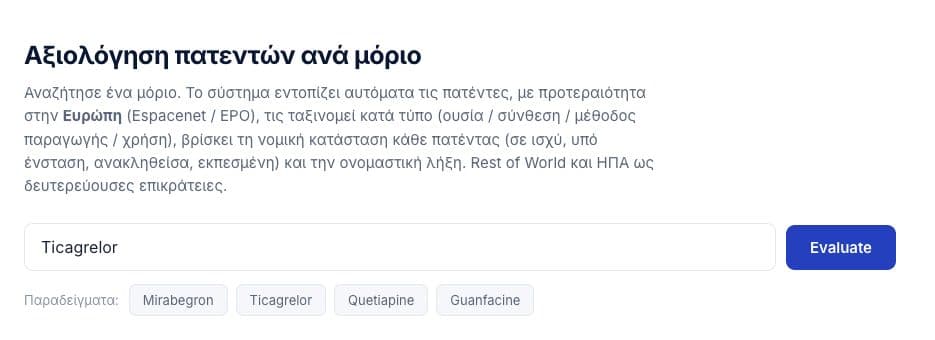
A molecule name is the whole input
No patent numbers, no classification codes, no legal training. The system works out the salt forms and combinations the same substance might be filed under, because a patent filed on a slightly different form of the molecule blocks you just as completely.
- Query expansion
- Salt-form handling
- 02
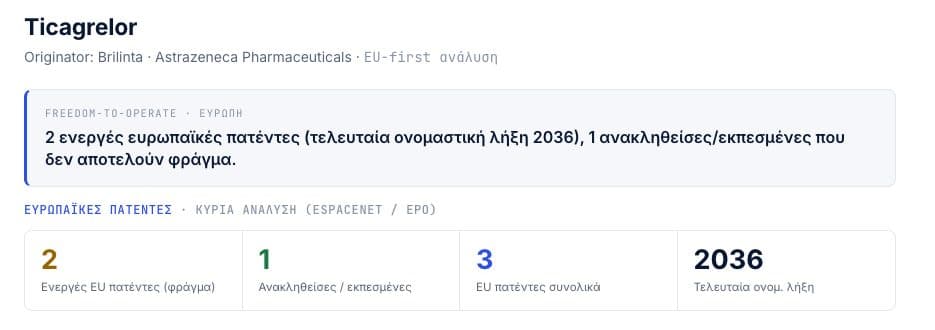
The answer comes first, in a sentence
Two active European patents, the last expiring in 2036, one revoked and therefore not a barrier. That is the decision-shaped version of the answer, before any of the detail. A product manager can act on that line alone.
- Legal-status resolution
- Expiry computation
- 03
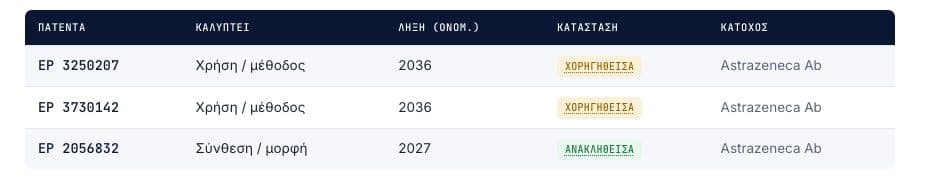
Then the patents themselves, classified
Each one labelled by what it actually covers, because a patent on the manufacturing method is a very different obstacle from a patent on the substance. One you can design around. The other you wait out.
- Substance / formulation / process classification
- 04
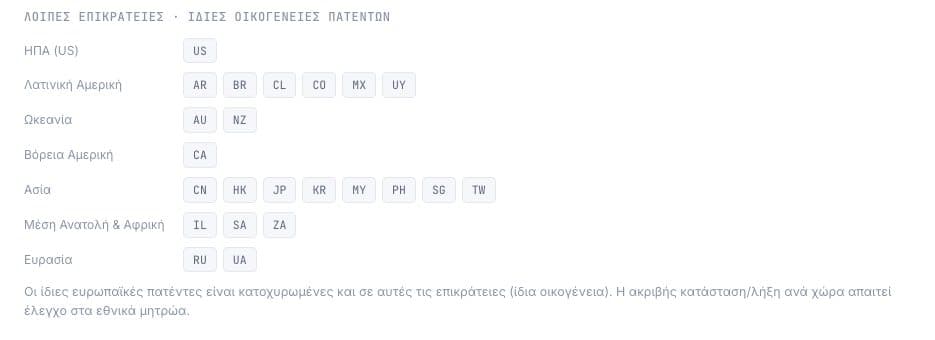
And where else the same family reaches
The same European patent is usually filed in twenty other countries. If you intend to export, that map is the difference between a market you can enter and one you cannot.
- Patent family mapping
- Jurisdiction breakdown
- 05
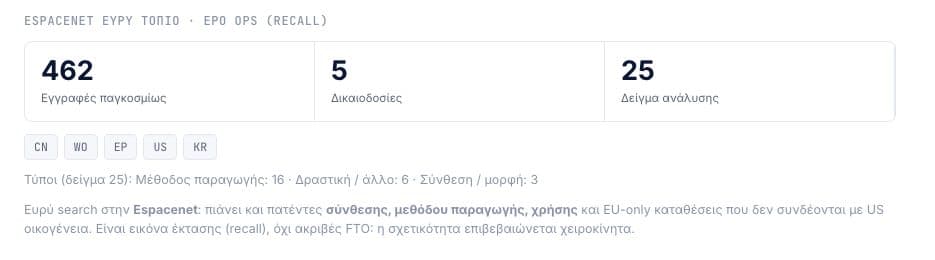
Read from hundreds of records, not a handful
462 worldwide records were pulled for this molecule and narrowed to the three that actually block. The value is not the three. It is not having to read the other 459 to find them.
- EPO OPS bulk search
- Relevance filtering
- 06
And it tells you where its answer stops
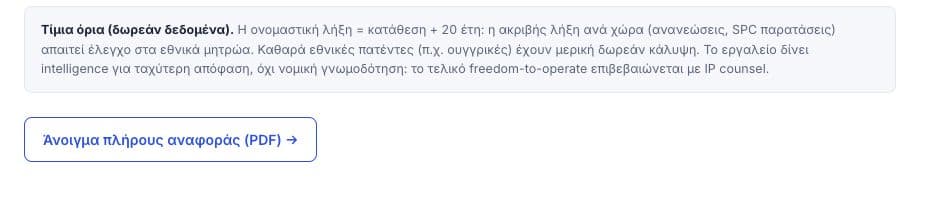
Nominal expiry is filing plus twenty years; real expiry per country depends on renewals and extensions that only national registries hold. The tool says so, on the page. It is built to make a decision faster, not to replace the patent attorney who confirms it, and pretending otherwise would be the fastest way to lose a client's trust.
- Stated confidence limits
- PDF report export
What it changed for the business
Screening a candidate molecule stopped being a piece of work you commission and became something you do in a meeting. That changes how many candidates get looked at, which is the actual point.
- 462 → 3records read, to the patents that actually blockMeasured, from one evaluation. The work is the narrowing.
- Minutesto a first answer, instead of a round trip to counselEstimate. The tool produces intelligence for a faster decision; final freedom-to-operate is still confirmed with an IP attorney.
- 30+molecules tested against live registriesMeasured, during development.
- \u20ac0in data costs, because every source is publicEPO Espacenet and the FDA Orange Book. No subscription, no private database.
Built with
- EPO / Espacenet
- FDA Orange Book
- Python
- Vercel